Oak is the default choice for wood wall panels in Europe and North America. Teak is the timber boat builders, luxury hotels and old Javanese houses have trusted for centuries. Both make beautiful walls, but they behave differently. This guide compares them honestly so you can pick the right one for your project.
Quick answer
Choose teak if the wall faces humidity (bathrooms, spas, kitchens, coastal homes, hotel lobbies with heavy air-conditioning), if you want a warm golden-to-grey patina, or if you want reclaimed timber with real history. Choose oak if you want a pale, uniform Scandinavian look and the room is dry and climate-stable.
Teak vs oak at a glance
| Teak (Tectona grandis) | Oak (European / white oak) | |
|---|---|---|
| Natural durability | Heartwood among the most durable timbers (EN 350 class 1 for mature teak) | Durable (EN 350 class 2) |
| Moisture behaviour | Natural oils and silica; very stable, low swelling | Moves more with humidity; tannins can stain with water and metal |
| Look | Golden-brown, ageing to silver-grey; rich grain | Light to mid brown, even grain, pale when oiled |
| Maintenance on interior walls | Very low; optional oil or clear matte finish | Low; needs a sealed finish in humid rooms |
| Reclaimed options | Wide: 50+ year-old teak from dismantled Javanese houses | Limited and usually expensive |
| Typical use | Feature walls, hotels, spas, restaurants, bathrooms (dry zones) | Residential living rooms, offices, Scandinavian interiors |
1. Durability and moisture resistance
Teak’s natural oils are the reason it was used for ship decks. On a wall, this means the panel stays stable when humidity rises and falls, which matters in hotel rooms with strong air-conditioning, in coastal apartments and in bathrooms. Oak is strong and hard, but it expands and shrinks more with humidity. Oak also contains tannins that can turn dark where water or iron fixings touch it.
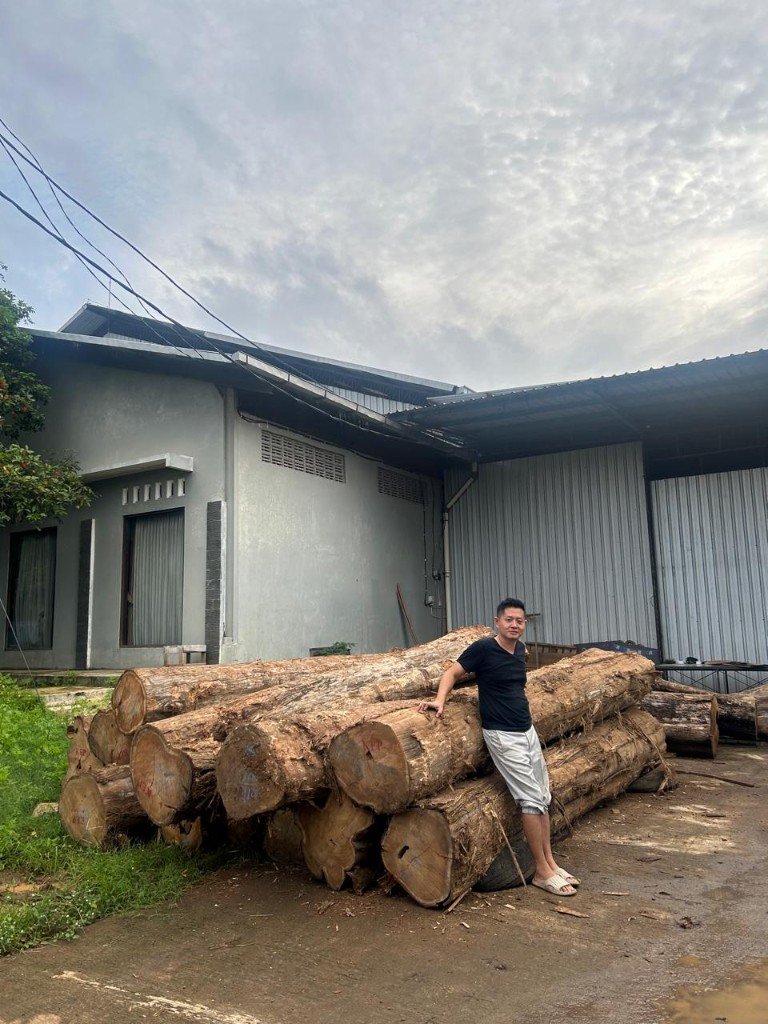
At Sony Sentral Industri we kiln-dry every panel to about 10% moisture content and bond pieces with B4/D4 waterproof glue. This keeps the panels stable after they are shipped from Indonesia to a drier or colder climate.
2. Look and character
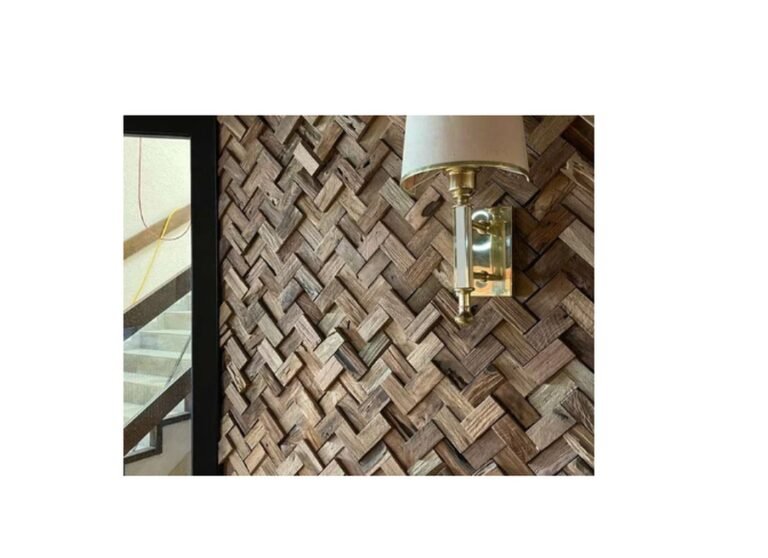
Oak gives a calm, uniform surface. Teak gives warmth. New teak is golden-brown. Reclaimed teak already carries decades of patina, nail marks and colour variation. That is why designers use it for statement walls behind a reception desk, a bed or a bar. Textured teak designs such as Volcano Wood, Teak Barkwood and Pyramid Wood create depth that flat oak boards cannot.
3. Sustainability
Both timbers can be responsible choices. What matters is proof. For teak, ask for:
- SVLK / V-Legal: Indonesia’s national timber legality system, recognised by the EU.
- FSC Chain of Custody: our certificate is FSC-C141539, with FSC 100% and FSC Recycled claims on eligible lots.
- EUDR geolocation data for EU shipments (see our EUDR guide and legal timber page).
Reclaimed teak is the lowest-impact option of all: no new tree is felled. Our Teak FSC Reclaimed panels use teak that is more than 50 years old.
4. Cost
Solid teak costs more per cubic metre than oak. Decorative wall panels, however, use thin pieces (roughly 8–23 mm), so the difference per square metre is smaller than many buyers expect. Buying directly from a manufacturer in Indonesia also removes one or two layers of distributor margin. Ask for a per-square-metre quote for your wall area and destination port. That is the only fair way to compare.
5. Installation
Installation is the same for both. Most teak panels are glued to a flat substrate (plywood, MDF or plastered wall) with a construction adhesive. Some designs, such as Teak Interlock, use an interlocking edge for near-invisible joints. Standard boxes cover 1 m², which makes ordering simple. See our installation and care guide.
Which should you choose?
- Hotel, spa, restaurant or humid climate: teak.
- Statement or textured feature wall: teak (3D, carved, root or bark designs).
- Reclaimed or eco story for your client: reclaimed teak with FSC Recycled claim.
- Pale, minimalist Nordic interior in a dry room: oak works well; our light-toned teak designs are an alternative.
FAQ
Is teak harder than oak?
No. White and European oak are slightly harder on the Janka scale. Teak’s advantage is not hardness. It is stability and natural resistance to moisture and decay, which matter more for a wall than for a floor.
Does teak turn grey on an interior wall?
Indoors, teak ages slowly to a deeper honey tone. Silver-grey weathering happens mostly outdoors under UV light. If you want the grey look inside, choose a pre-finished colourway such as Ancient Grey.
Can teak wall panels be used in a bathroom?
Yes, in dry zones and ventilated bathrooms. Seal the surface and avoid direct water spray.
Do you ship teak wall panels to Europe, the US and Africa?
Yes. We manufacture in Jepara, Central Java, and ship worldwide with full export documents (SVLK V-Legal, FSC claims on eligible lots, certificate of origin).
Want to compare samples side by side? Contact us or message us on WhatsApp with your wall size and destination port. We will send a per-m² quote and can dispatch sample panels.