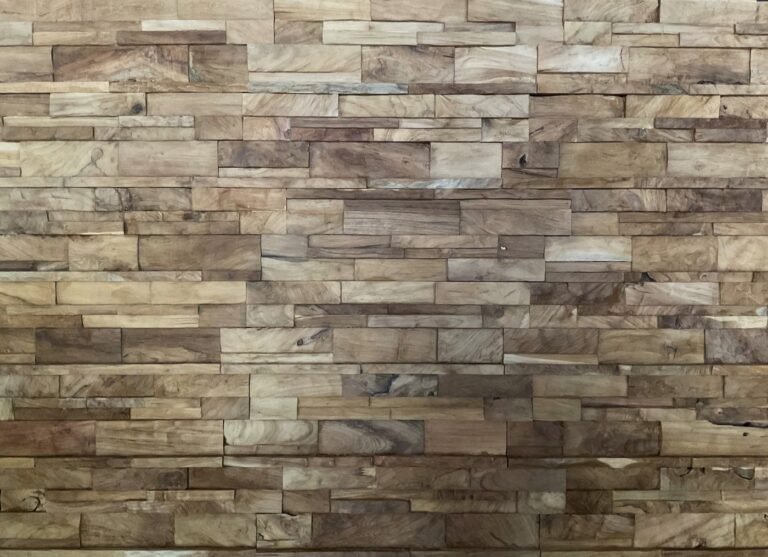
A wall that looks like split natural stone but feels as warm as wood: that is what teak root wall panels offer. The material is what stays in the ground after the teak harvest. In our workshop in Jepara, Central Java, craftsmen carve it into panels with the texture of split-face stone.
This article explains where the roots come from, why they look like stone, which designs are available and where the limits of the material lie.

Why wood can look like stone
A root does not grow like a trunk. It twists through the soil, and its grain is irregular, wild and full of colour changes. Once carved, it gives surfaces that recall natural layers of rock.
Three things create the stone effect:
- Varying depth: depending on the design, panels run from 8 to 25 mm thick. The blocks step forward and back like the stones in a dry-stone wall.
- Handwork: every face is worked by hand. No two blocks are alike, and there is no repeating pattern.
- Light and shadow: lit from above, edges and joints stand out. In the Grey finish the resemblance to slate or limestone is especially clear.
The story of the material: from the ground to the wall
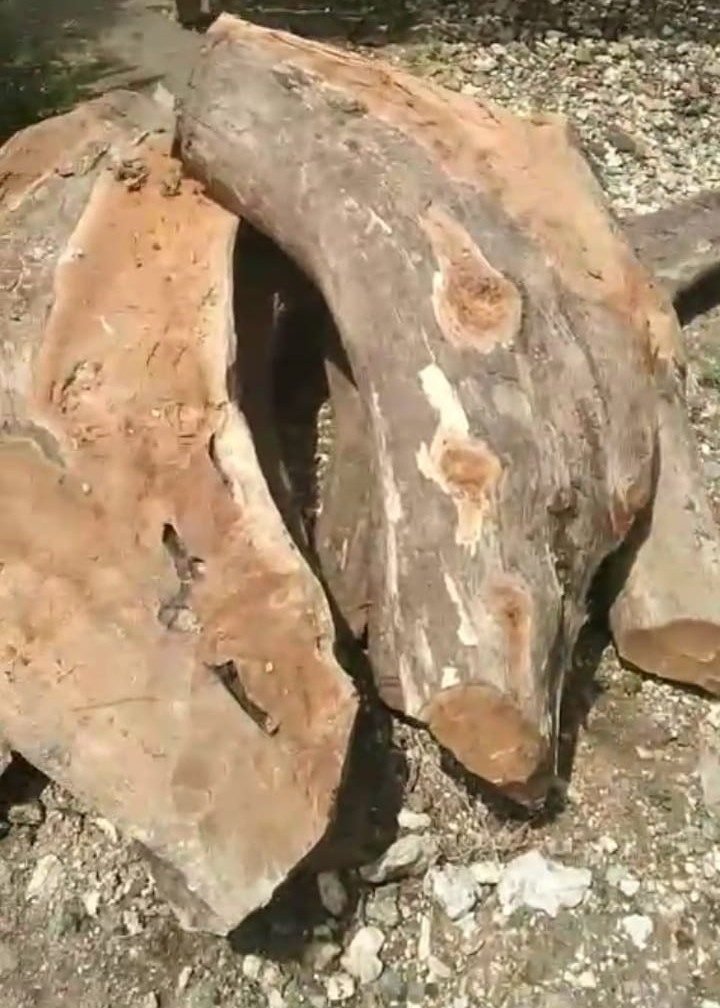
After a teak tree is harvested, the stump stays in the ground. It is dug out by hand. The heavy pieces are then carried, loaded and collected.

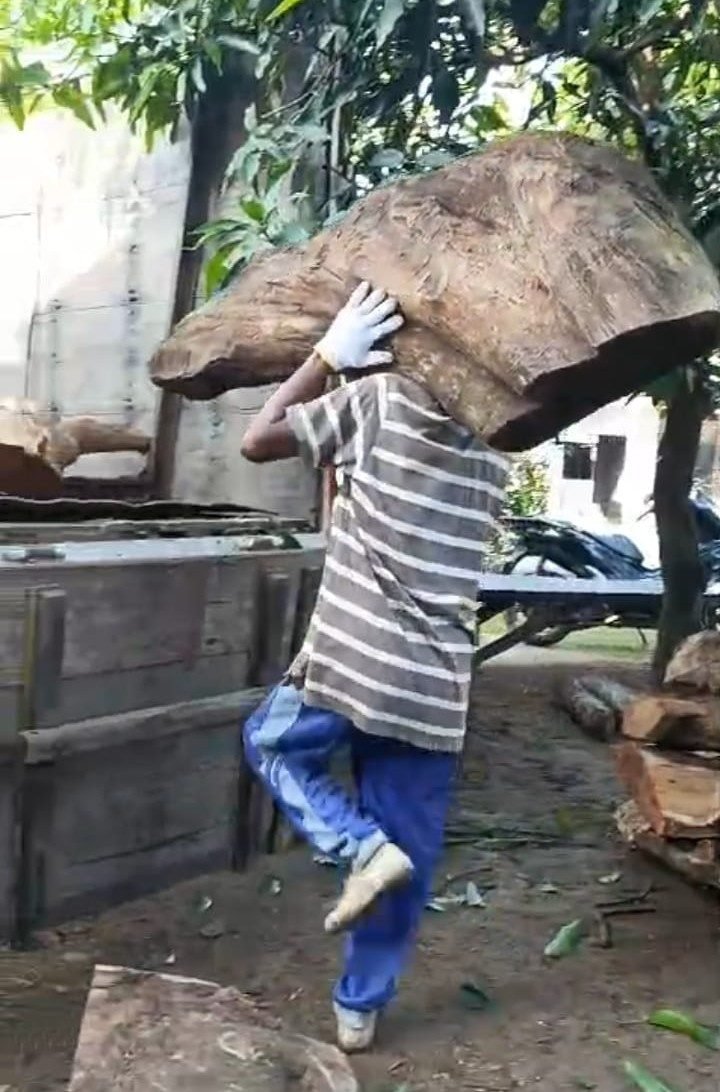
Next the soil is removed and the wood is sawn into manageable blocks. It is dried to a moisture content of 10% ± 2%, carved by hand and glued into panels with B4/D4 glue. Because the root is so irregular, it is of little use as construction timber and often ends up as firewood. As a wall panel, that leftover becomes something special.

Three designs in teak root
Stone Wood: the stone wall made of wood
Long blocks in staggered courses, like a stacked stone wall. This is the design that looks most like stone.

Volcano Wood: the rugged lava wall
Deeply carved blocks of different sizes form a bold, dramatic surface for large accent walls.
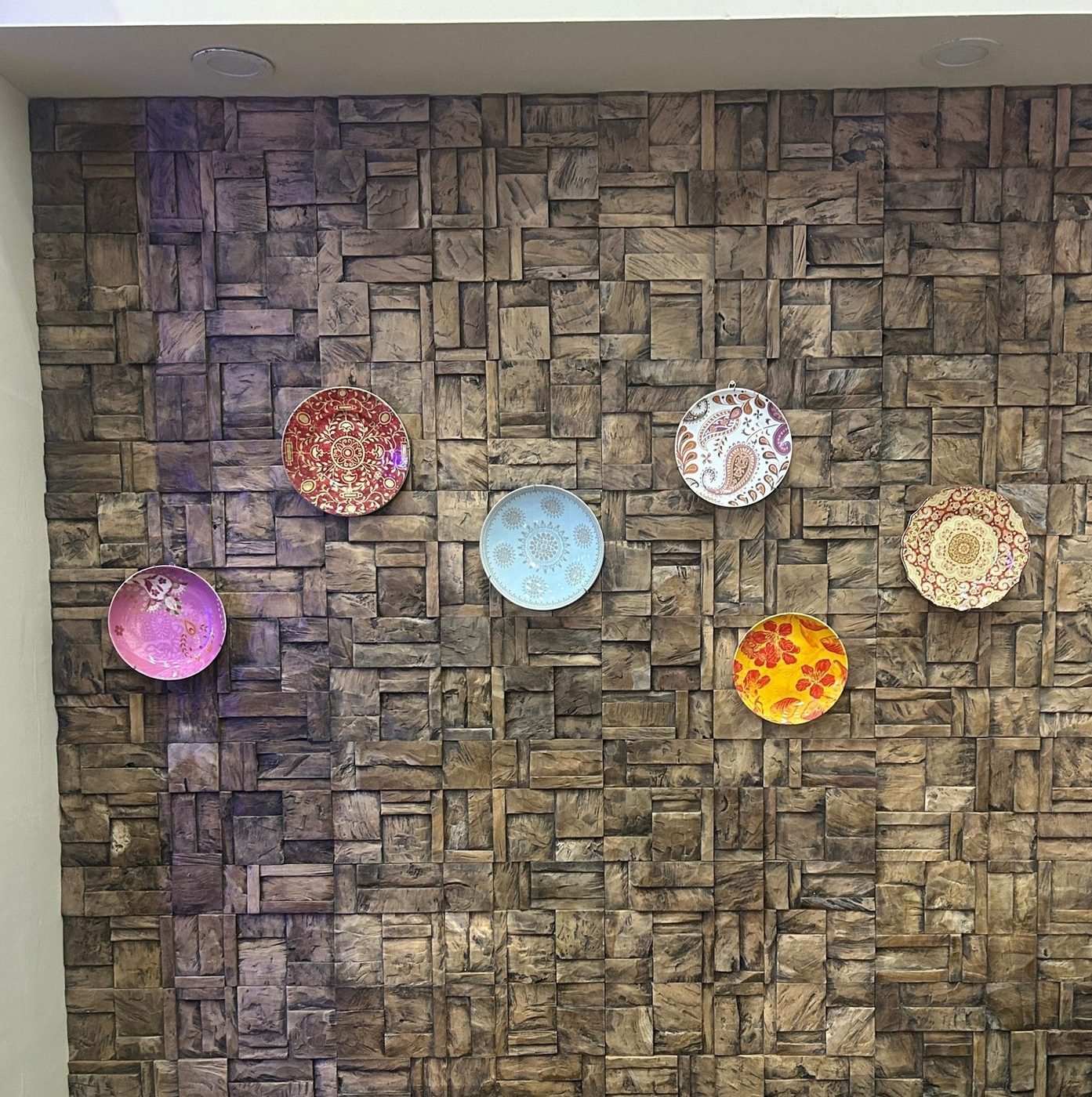

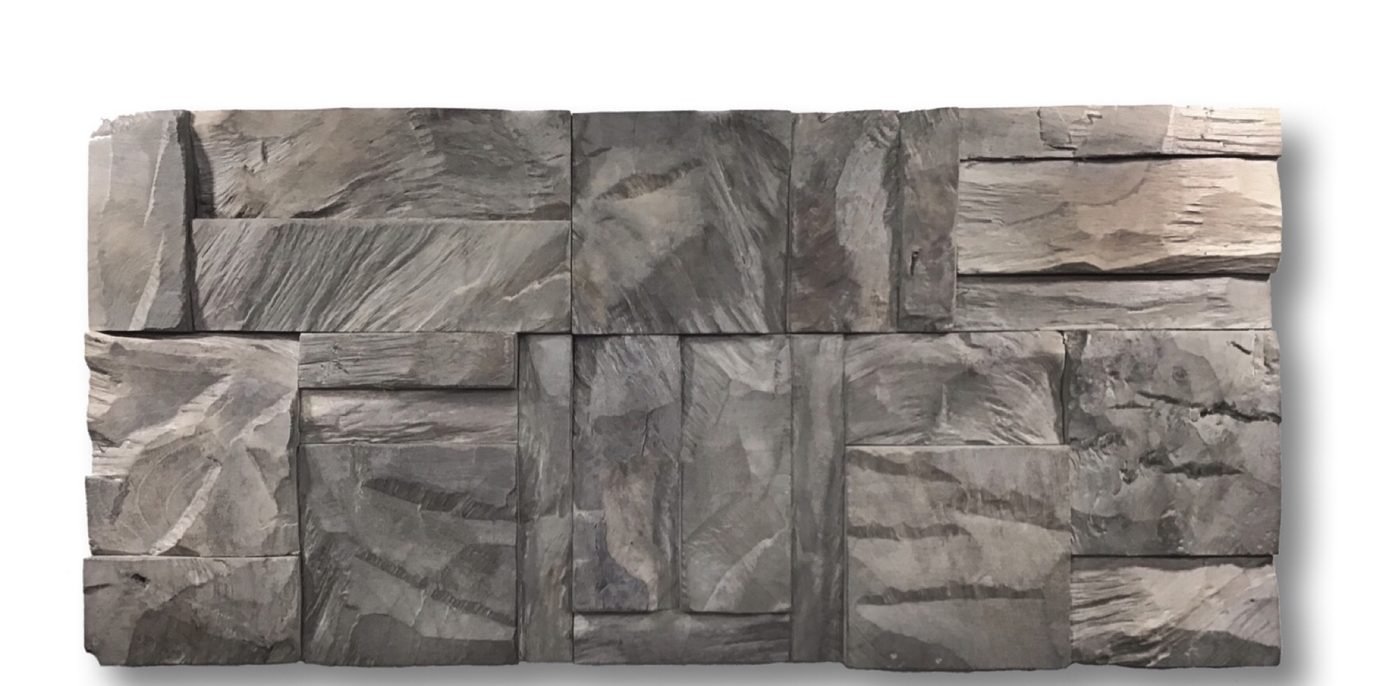
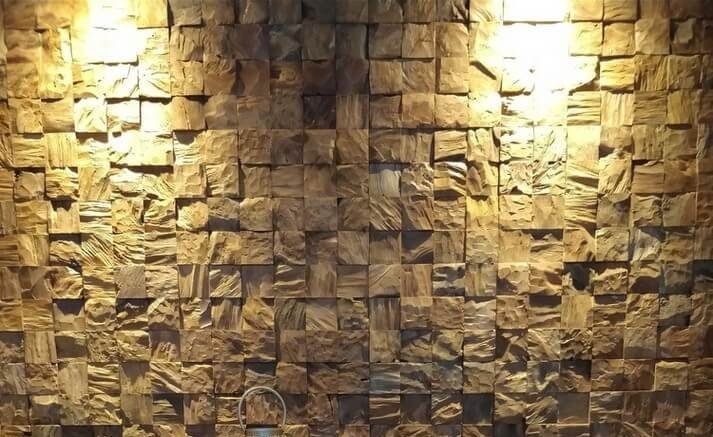
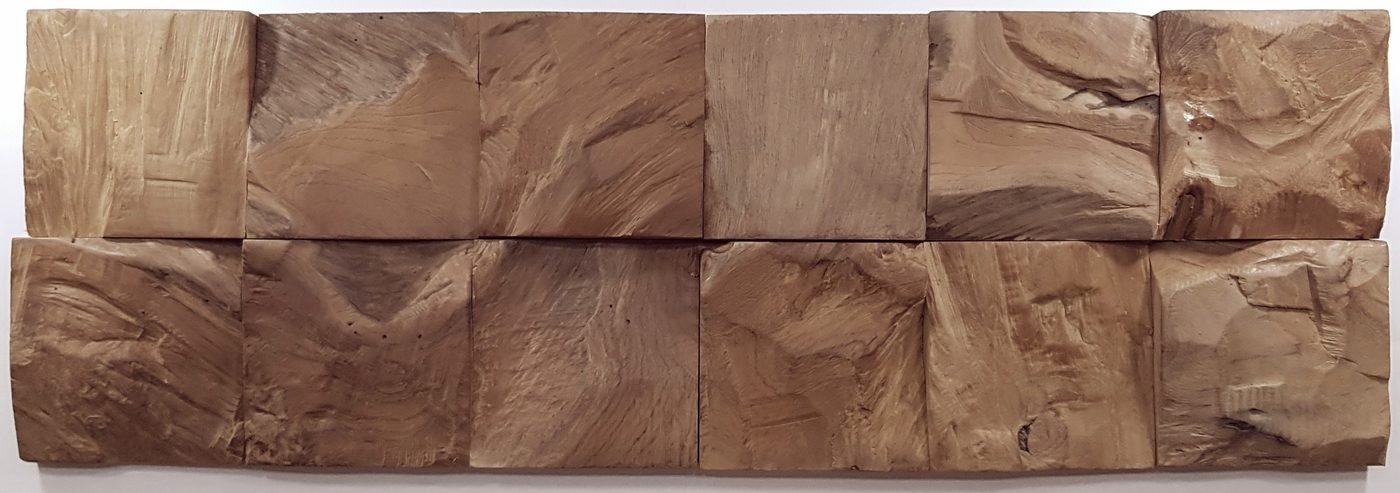
Cube Root: geometry with root grain
Hand-carved cubes in a clean grid. This design feels more contemporary, and every cube face shows its own grain.
| Design | Panel size | Thickness | Finish | Per box (1 m²) |
|---|---|---|---|---|
| Stone Wood | 555 × 180 mm | 8–25 mm | Natural, Grey | 10 pcs |
| Volcano Wood | 495 × 225 mm | 8–23 mm | Natural, Grey | 9 pcs |
| Cube Root | 552 × 184 mm | 8–20 mm | Natural | 10 pcs |
The advantages of teak root wall panels
- The look of stone without the weight. By our estimate, one square metre weighs about 10 kg. Natural stone veneer often reaches 40 to 60 kg/m², depending on thickness. That means less load on the wall and lower freight costs.
- Simple installation. No mortar and no stonemason: the panels are glued to a dry, flat surface and cut with a fine-tooth saw.
- Warm rather than cold. Wood conducts heat far less than stone. The wall feels pleasant to the touch and makes the room more inviting.
- Every wall is one of a kind. Handwork and natural root grain mean that nothing repeats.
- Strong impact from the 3D relief. A few spotlights above the wall are enough to create depth and a focal point.
- A sensible use of a leftover. No extra tree is felled for the root. We use what stays in the ground after the harvest.
- Little maintenance. A soft brush or a vacuum brush attachment is enough, and there are no grout joints to clean.
Teak root or real natural stone?
| Teak root panel | Natural stone veneer | |
|---|---|---|
| Weight | approx. 10 kg/m² (estimate) | often 40–60 kg/m² |
| Installation | glue, cut with a wood saw | specialist, tile adhesive or mortar, stone saw |
| Feel | warm, wood | cool, mineral |
| Outdoors and wet zones | not suitable | suitable (depending on the stone) |
| Fire behaviour | combustible, check the regulations | non-combustible |
What you should honestly know
- Indoor use only. For façades, real stone remains the better choice. In bathrooms, stay outside the splash zone and seal the surface.
- Check fire safety. Hotels, restaurants and public buildings may have requirements for wall linings. Confirm them before ordering.
- Colour differences are intended. Order a sample and mix panels from several boxes before gluing.
- Preparation: let the boxes acclimatise in the room for 24 to 48 hours and allow 5 to 10% extra for cutting.
Documents: SVLK and EUDR
Every export shipment receives a V-Legal document under Indonesia’s SVLK timber legality system. Unlike reclaimed teak from old houses, the root has had no previous life in a building. You should therefore assume that the EU Deforestation Regulation (EUDR) applies to these panels; see our EUDR guide for importers. For EU orders we provide the documents, including geolocation data. Whether a lot can be supplied with an FSC claim is confirmed per order. This is general information, not legal advice.
Frequently asked questions
Is this real wood or a stone imitation?
It is solid teak root, carved by hand, with no plastic or stone. The stone effect comes only from shape, grain and light.
Which design looks most like stone?
Stone Wood, especially in Grey. Volcano Wood is rougher and bolder, while Cube Root is more contemporary and geometric.
What can the panels be mounted on?
Dry, clean, flat walls, using a construction adhesive suitable for wood. Very uneven walls should be levelled first.
How should I light the wall?
With spotlights or an LED strip from above, as close to the wall as practical. Grazing light brings out the relief best.
Conclusion
Teak root panels bring the strength of a stone wall into the home without its weight or chill. Where weather, water or strict fire rules are involved, real stone remains the right choice. For interior walls with character, teak root is a convincing alternative.
Interested? See all our teak wall cladding or request samples and a quote.
CV. Sony Sentral Industri, Jepara, Indonesia. Manufacturer of teak wall panels since 2011.